Killhope Lead Mine
| Location | Cowshill, Weardale, County Durham — 54.7831, -2.2731 (approximate) |
|---|---|
| Commodities | Lead, Zinc |
| Type | Metal |
| Worked | 1818–1910 |
| Operators | W.B. Lead Company (1818–1883), Weardale Lead Company (1884–1910) |
| Status | Researched |
Overview
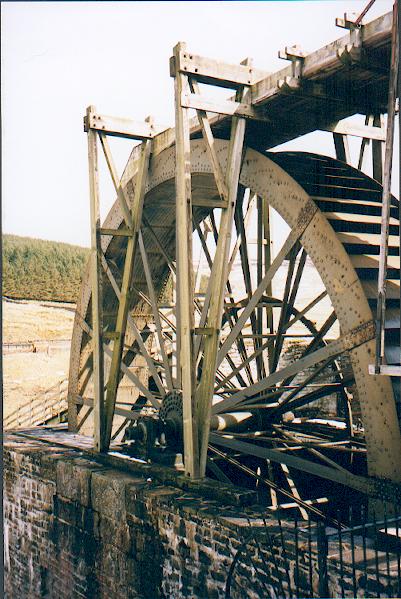
Killhope, in upper Weardale, was a working lead mine centred on Park Level, now preserved as the North of England Lead Mining Museum — one of the region's best-known surviving lead-mining landscapes, complete with its iconic 1870s waterwheel.
History
Mining in the Killhope area predates detailed records; output before 1818 alone is estimated to have exceeded 60,000 tonnes. From 1818 the W.B. Lead Company drove and operated Park Level Mine, the district's principal working, eventually intersecting eleven mineral veins and producing over 31,200 tonnes of lead concentrate by 1883. The Weardale Lead Company took over from 1884, adding a further 9,000 tonnes before production ceased in 1910 as prices fell. The mine reopened briefly during the First World War in 1916, then lay abandoned for over 60 years. A small-scale operation in the 1950s recovered around 180 tonnes of zinc concentrate from old waste material.
Geology
The mine worked a series of lead-bearing veins in the North Pennines orefield, with Park Level eventually intersecting eleven separate mineral veins.
Workings
Park Level extends into the fellside alongside Killhope Burn; the first 100 metres remain accessible to visitors today, with deeper sections collapsed and unsafe. Ore was crushed and dressed using water power, including the surviving waterwheel now known as the Killhope Wheel.
Closure
Lead production ceased in 1910 as prices fell; a brief wartime reopening in 1916 was the mine's last significant working period before it was abandoned for more than 60 years.
What remains
The site was restored as a museum from 1984, with the mineshop opening that May, the Killhope Wheel restored in 1991, and underground mine access opened to visitors in 1996. As of the latest information available, the museum is temporarily closed following a safety issue identified with the historic reservoir system that feeds the waterwheel, with restoration work under way.
Surviving and restored structures include the washing floor, mine shop, buddle house, jigger house, the Armstrong/Killhope waterwheel, mine cart ramp, launder and water race bridges — several individually listed, with the site as a whole containing a scheduled monument.
Redevelopment
Around £1.15 million has been invested in recent restoration work through Arts Council England and Durham County Council funding, though the site's temporary closure means visitor access is currently limited.
Abandoned workings can be dangerous — unstable ground, uncapped shafts, flooding and bad air are common even where a site looks safe from the surface. This entry describes history and general location only; it is not an access guide.
Recorded claims
Individual factual claims, each attached to the source(s) that support it below. Where sources disagree, both are kept.
- The museum's own website states it is currently closed following a safety issue with the historic reservoirs feeding the waterwheel, with reopening postponed pending restoration work. 1
- Total output from the Killhope workings before 1818 alone is estimated to have exceeded 60,000 tonnes of lead concentrate. (uncertain) 2
Photographs & further reading
This page doesn't try to reproduce everything — these are the best original sources found for this mine.
The site's own museum, with visiting information and the most up-to-date status of restoration work.
View sourceFurther freely-licensed photographs of the waterwheel and mine buildings.
View sourceImages
Sources
- (primary) Killhope Lead Mining Museum — Killhope Lead Mining Museum
- (secondary) North of England Lead Mining Museum — Wikipedia