Odin Mine
| Location | Castleton, Derbyshire — 53.3482, -1.8017 (approximate) |
|---|---|
| Commodities | Lead, Barite, Calcite, Fluorspar |
| Type | Metal |
| Worked | 1280 (documented)–1869 |
| Operators | Richard Bagshawe (?–1856), Robert How Ashton (1856–1869) |
| Status | Researched |
Overview
Odin Mine, at the foot of Mam Tor near Castleton, is reputed to be the oldest recorded lead mine in Derbyshire. Now owned by the National Trust, its open limestone gorge and surviving crushing wheel make it one of the most visited relics of the Peak District's lead-mining past.
History
The earliest documented reference to the mine is a 1280 trial record concerning a poacher, making it one of the oldest named lead mines in the region — though claims of still-earlier Roman, Saxon or Danish working are unsupported by direct evidence. Early extraction used fire-setting: fires were lit against the rock face and left to burn overnight, and the heated rock was then doused with water to crack it, since there was as yet no way to deal with the water that constantly flooded the workings. Those drainage problems were only overcome around four centuries later, allowing production to climb to its peak between 1720 and 1800, when around 100 men, women and children worked the mine and raised up to 800 tonnes of lead ore a year — a rich vein struck in April 1706 alone employed 41 men and eight women. Richard Bagshawe, later High Sheriff, was an early investor, and the Bagshawe family retained an interest until September 1856, after which the mine passed to Robert How Ashton of Losehill Hall. Lead production ceased in 1869, though a final, brief episode of fluorspar and barite extraction took place in 1908 and 1909.
Geology
The mine worked lead-bearing veins within a limestone gorge at the foot of Mam Tor; the site is now also designated a Site of Special Scientific Interest for the metal-tolerant plants (metallophytes) that grow on its spoil.
Workings
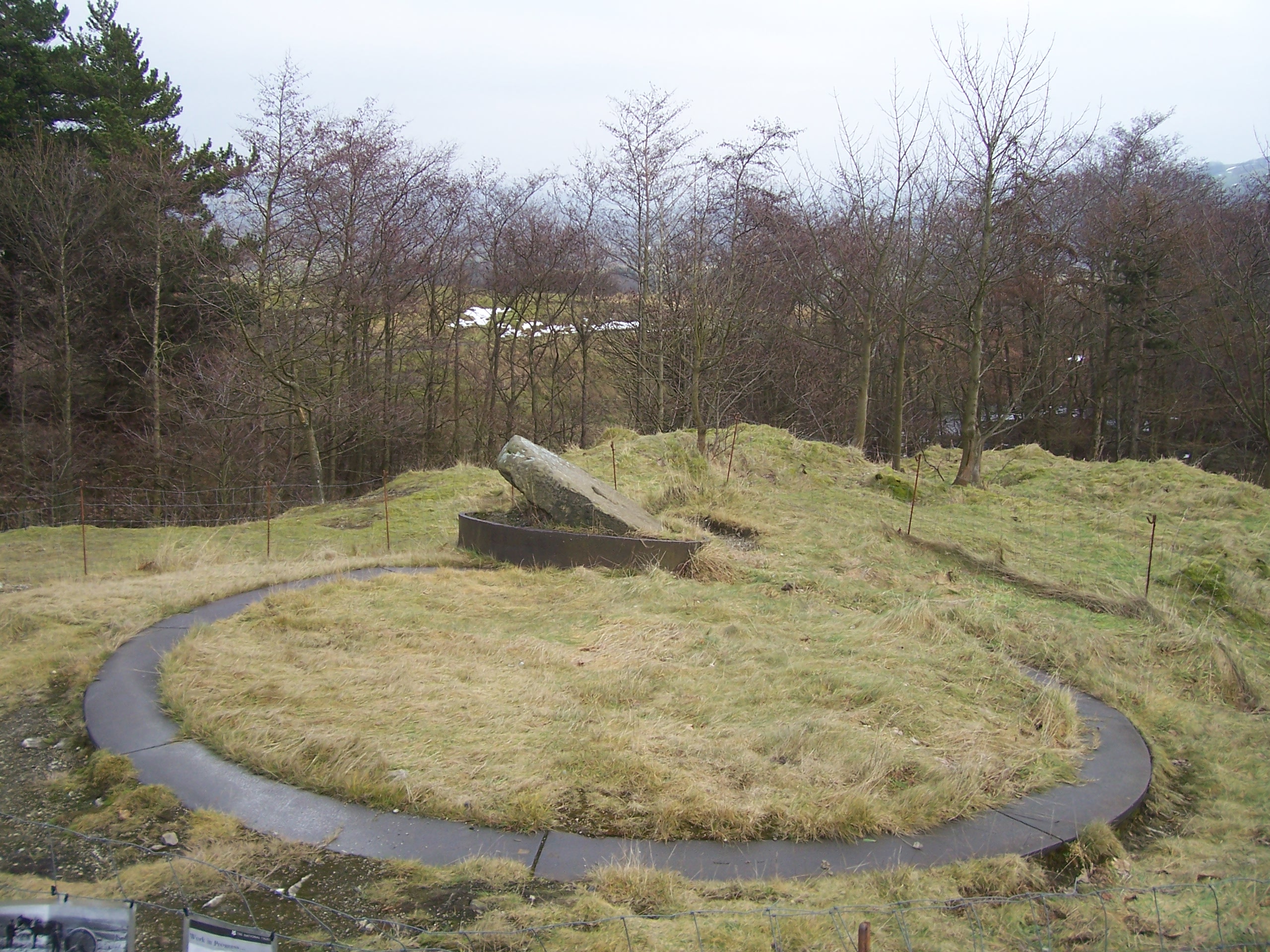
Working reached at least 500 metres underground via roughly 1,500 metres of levels and shafts. A gritstone ore-crushing wheel, 1.75 metres across and built in 1823 for £40, survives on site.
Closure
Lead production ceased in 1869; a final brief period of fluorspar and barite extraction followed in 1908–1909 before the mine was abandoned for good.
What remains
The site is disused and now owned by the National Trust, within a designated Scheduled Ancient Monument and Site of Special Scientific Interest.
Visible remains include the limestone gorge itself, the original open-cast workings, spoil heaps, and the surviving 1823 crushing wheel; Odin Cave, a short natural feature at the site, extends around 10 metres underground.
Redevelopment
No redevelopment has taken place; the site is preserved by the National Trust as a heritage and access site.
Abandoned workings can be dangerous — unstable ground, uncapped shafts, flooding and bad air are common even where a site looks safe from the surface. This entry describes history and general location only; it is not an access guide.
Recorded claims
Individual factual claims, each attached to the source(s) that support it below. Where sources disagree, both are kept.
- The earliest documented reference to Odin Mine is a 1280 trial record concerning a poacher; claims of earlier Roman, Saxon or Danish working are not supported by direct historical evidence. 1
- Lead production ceased in 1869; some brief further working for fluorspar and barite took place in 1908 and 1909. 1
Photographs & further reading
This page doesn't try to reproduce everything — these are the best original sources found for this mine.
A local history account with further detail on the mine's working methods and remains.
View sourceFurther freely-licensed photographs of the crushing wheel and gorge.
View sourceImages
Sources
- (secondary) Odin Mine — Wikipedia
- (secondary) Odin mine lead mine near Castleton — Derbyshire Heritage